
A small pantry can become messy fast. One grocery trip, a few half-open snack boxes, and suddenly you cannot find the pasta, spices, or canned beans you know you bought last week. The good news is that a tiny pantry can still work beautifully if every inch has a purpose.

Start by taking everything out. Check what is expired, what you never use, and what is taking up space for no reason. A small pantry does not have room for “maybe someday” items. Keep what your household actually eats and donate unopened extras if they are still safe to use.
Next, group similar items together. Create simple zones for snacks, breakfast foods, baking supplies, canned goods, pasta, rice, spices, and backstock. When every category has a home, it becomes much easier to put groceries away and avoid buying duplicates.
Clear bins are one of the best tools for a small pantry. Use them for snack bags, seasoning packets, baking items, kids’ treats, or small packages that usually fall over. Because you can see what is inside, you waste less food and spend less time searching.
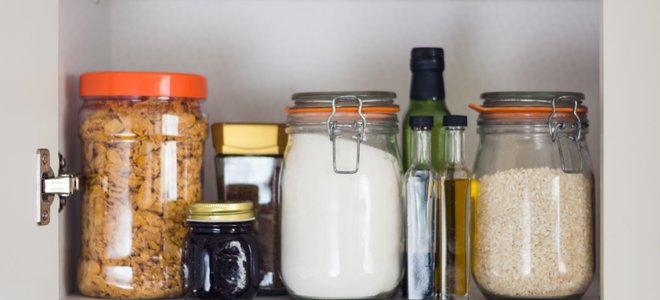
Remove bulky boxes whenever possible. Individually wrapped granola bars, oatmeal packets, tea bags, and popcorn bags can usually be stored more neatly in bins or baskets. This instantly frees up space and makes shelves look cleaner.

Use vertical space. Shelf risers, stackable containers, and tiered racks can help you store more without creating a pile. For cans and spices, a tiered organizer makes everything easier to see at a glance.
A lazy Susan is another smart choice for awkward corners or deep shelves. Use one for oils, sauces, condiments, spreads, or baking extracts. Instead of digging behind bottles, you can simply spin and grab what you need.
Do not forget the pantry door. An over-the-door rack can hold spices, snacks, wraps, foil, cleaning cloths, or small jars. In a small kitchen, the back of the door is valuable storage space.
Labels may seem simple, but they help everyone in the house keep the system going. Label bins by category, not by overly specific items. For example, “Snacks,” “Baking,” “Pasta,” and “Breakfast” are easier to maintain than dozens of tiny labels.
Finally, do a quick reset once a week. Straighten bins, move older food to the front, and note what you are running low on. A small pantry works best when it is maintained regularly.
With the right system, even a tiny pantry can feel organized, useful, and surprisingly spacious.


