
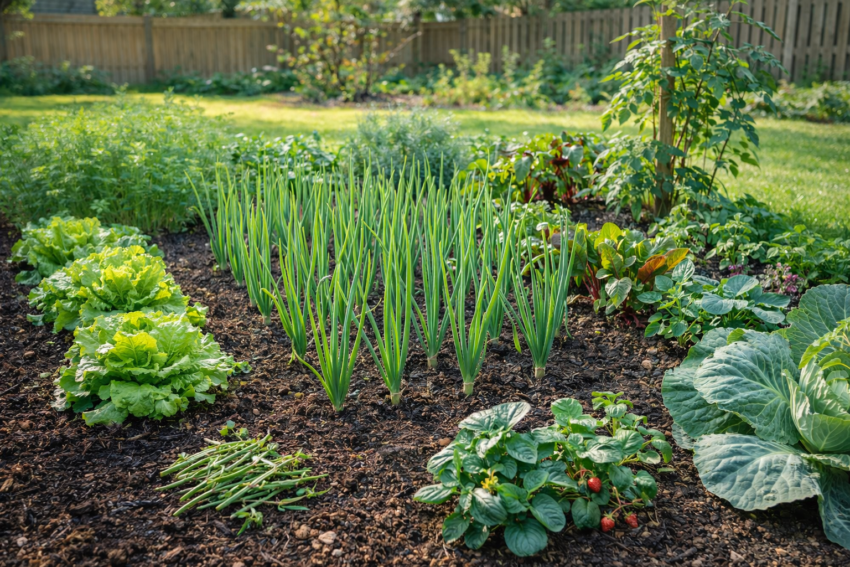
Companion planting is one of the simplest ways to grow healthier vegetables without relying on complicated methods. When certain plants are grown close together, they can naturally support each other by improving soil conditions, optimizing space, and encouraging balanced growth. Onions are especially popular in companion gardening because of their compact size, shallow root system, and strong scent, which makes them easy to combine with many other crops.
Whether you are growing onions in raised beds, traditional garden rows, or containers in a small backyard, choosing the right companions can make a noticeable difference in plant vigor and overall harvest quality. In this guide, you will discover seven perfect plants to grow next to onions — all practical, beginner-friendly, and suitable for small-space gardening.
1. Carrots
Carrots and onions are one of the most classic garden pairings. Their growth habits complement each other beautifully. While onions grow mostly above the soil surface with shallow roots, carrots develop deeper underground. This means they do not compete heavily for nutrients.
Additionally, onions’ strong aroma can help mask the scent of carrots, which may reduce attention from common garden pests. At the same time, carrots help loosen the soil, improving air circulation around onion roots. This partnership works well in raised beds, garden rows, and even deep containers.
2. Lettuce
Lettuce is a fast-growing, shallow-rooted crop that thrives in cooler conditions — just like onions. Since onions grow upright and do not spread widely, lettuce can be planted between onion rows without crowding.
This combination maximizes space efficiency, especially in small gardens or container setups. Lettuce also acts as a living mulch, shading the soil surface and helping retain moisture. For gardeners who want continuous harvests, lettuce and onions make an excellent early-season duo.
3. Beets
Beets are another root crop that pairs well with onions. Their root systems develop at different depths, minimizing competition. Beets also tolerate similar watering schedules and sunlight requirements, making care routines simple and consistent.
When grown together, both crops can thrive without interfering with one another. This makes them ideal companions for gardeners who prefer organized, easy-to-manage planting layouts.
4. Spinach
Spinach grows quickly and benefits from the partial shade created by onion tops. Since onions do not produce dense foliage, spinach still receives enough sunlight while enjoying slightly cooler soil conditions.
This pairing is particularly effective in early spring or fall gardens. Spinach can often be harvested before onions reach full maturity, allowing you to use the same space efficiently throughout the season.
5. Tomatoes
Tomatoes and onions can coexist successfully when spaced properly. Onions remain compact at ground level, while tomatoes grow vertically with support. This vertical layering approach makes excellent use of garden space.
Some gardeners also appreciate the strong scent of onions near tomato plants. While no plant can completely eliminate pest issues, diverse plantings help create a balanced growing environment. When planting together, ensure tomatoes receive adequate sunlight and airflow.
6. Strawberries
Strawberries and onions can be grown side by side in raised beds or large containers. Strawberries spread across the surface, while onions grow upright, allowing both crops to occupy different layers of space.
This pairing can be particularly useful in small backyard gardens where maximizing every inch matters. Be sure to maintain consistent watering and avoid overcrowding for best results.
7. Cabbage
Cabbage and onions share similar sunlight and soil preferences. Onions can be planted around cabbage plants without competing heavily for nutrients. The varied textures and growth forms also create a visually balanced garden bed.
Diverse plant groupings support soil health and encourage a more resilient garden ecosystem. As with all companion plantings, proper spacing remains key to success.
Practical Tips for Companion Planting with Onions
-
Maintain consistent spacing to prevent overcrowding.
-
Use well-draining, nutrient-rich soil.
-
Rotate crops each season to maintain soil balance.
-
Combine shallow and deep-rooted plants for better nutrient distribution.
-
Water evenly, especially in container gardens.
Companion planting works best when based on thoughtful planning rather than random combinations. Start small, observe results, and adjust your layout as needed.
Conclusion
Growing onions alongside the right companion plants can help you maximize space, simplify maintenance, and create a more productive garden. Carrots, lettuce, beets, spinach, tomatoes, strawberries, and cabbage all complement onions in different ways, whether through root depth, growth timing, or space efficiency.
The key to success lies in balanced spacing, healthy soil, and consistent care. By choosing compatible plants and planning your layout carefully, you can build a garden that is both practical and rewarding. Companion planting is not about complexity — it is about smart combinations that help your garden perform at its best, season after season.
With thoughtful design and simple techniques, your onion bed can become one of the most productive areas in your garden.


