
The digital world seemed to come to a sudden, collective standstill this morning.
In an era where we’ve grown used to fire, fury, and unapologetic defiance from one of the UK’s most polarizing voices, what we saw instead was something far more startling: raw, disarming vulnerability.
Katie Hopkins, long known as the self-styled “iron lady” of modern media, delivered a bombshell — one that had nothing to do with politics and everything to do with the human heart.
In a video already racking up tens of millions of views, the familiar bravado was nowhere to be found.
Gone was the sharp edge.
Gone was the defiance.
In its place stood a woman seemingly on the brink of emotional collapse, speaking candidly to an audience that looked just as weary as she did.
“I’ve been waiting for the right time to tell you all… and that time is now,” she began.
But this wasn’t a political manifesto.
It wasn’t the launch of a campaign.
As the camera continued to roll, a dense, almost suffocating silence filled the screen — the kind of silence that feels endless, stretching far beyond a few passing seconds.
When she finally spoke, there was no anger in her voice. No fire.
Instead, it trembled with something deeper — a quiet, existential sorrow for the state of the people she believes she represents.
The so-called “explosive announcement” wasn’t a scandal.
It wasn’t a leaked document or a headline-grabbing revelation.
It was something far more personal.
It was her unfiltered truth — a raw confession about the pain she sees unfolding in the world today.

Hopkins’ message moved away from the familiar external battles with media and politics, turning instead toward the quieter wars unfolding inside ordinary homes.
She spoke of the “quiet desperation” she sees in parents juggling three jobs just to keep the lights on.
Of elderly people swallowed by loneliness in a world racing ahead without them.
Of young people suffocated by anxiety, convinced there is no future waiting for them.
“I read your messages every night,” she said softly, her eyes filling with tears she could no longer hold back.
“I see the pain. The fear of not making it to the end of the month. The crushing weight of a world that feels like it’s stopped caring about the individual.
It makes me want to weep for all of us. We are losing our way — and it’s breaking my heart.”
Many are now describing the shift in tone as something close to a “spiritual awakening.”
For years, the narrative has been framed as “us versus them.” But this time, the line seemed to blur — replaced by something far more human, and far more fragile.
The announcement marked a clear pivot — away from division, toward a shared and universal “we.”
She spoke about the relentless pressure of modern life: rising living costs, the slow erosion of community, and the chilling sense that so many people feel like little more than cogs in a vast, indifferent machine.
This wasn’t merely a video.
It felt like a mirror — held up to a society quietly fracturing at the seams.
She talked about mothers skipping meals so their children wouldn’t have to.
About fathers sitting alone in the dark, wrestling with how to tell their families the money has run out.

It was less a statement — and more a collective confession.
“We are being told to be angry at each other every single day,” she said, pausing to brush away a tear.
“But while we argue over hashtags and headlines, we are losing something far more important — our shared humanity.
I lie awake at night thinking about cold homes and empty cupboards.
I think about the people who feel invisible.
My heart isn’t breaking for a political movement. It’s breaking for you — the person on the other side of this screen who feels like the world has quietly given up on them.
I want you to know I see you. I feel the weight you’re carrying.”
This unguarded moment of empathy has left both her most loyal supporters and her fiercest critics in stunned, contemplative silence.
The true “bombshell” wasn’t controversy — it was sincerity. Raw and unfiltered.
In a digital age shaped by curated perfection and constant outrage, watching a public figure openly admit to feeling overwhelmed by the pain of ordinary people felt almost radical.
Moments of collective sorrow like this are rare.
She spoke about the “hollow victory” of winning arguments on television while people beyond the studio lights continue to struggle in silence.
The real headline wasn’t a policy shift or a dramatic declaration.
It was something far more human.
Behind the iron-clad persona stood a woman openly admitting fear — fear for the future of our children, and for the fragile thread of decency that binds us together.
And perhaps that honesty, more than anything else, is what truly unsettled the world.
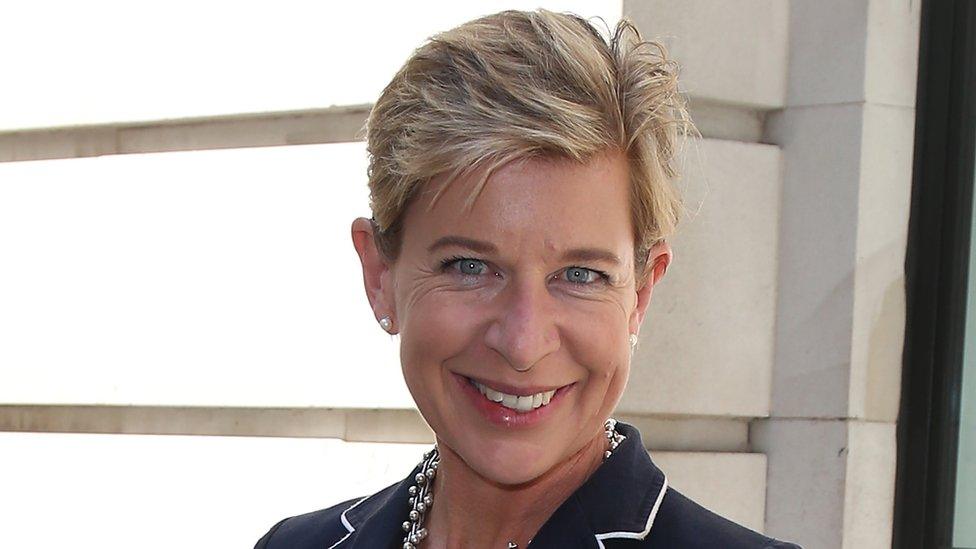
Social media reactions quickly became a swirl of confusion, relief, and emotional release.
Many viewers said they felt truly “seen” and “heard” for the first time in years.
One commenter wrote,
“I didn’t expect to cry this morning. But hearing someone finally say how hard it is just to survive right now… it broke me.”
This was the “shock” the headlines had promised — not scandal, not outrage — but the jolt of genuine human connection in a world that often feels distant and cold.
People are exhausted.
Exhausted from the constant fighting.
Exhausted from the anger.
Simply tired.
As the video drew to a close, Katie Hopkins didn’t unveil a ten-point political plan or call for protest.
Instead, she offered something quieter — a plea for resilience, and a simple request for people to look at one another with kindness again.
“If we lose our ability to feel for each other — to truly ache for the person beside us — what do we have left?”
“…standing next to us,” she warned, “then we have already lost — no matter who holds power.”
The screen slowly faded to black.
And millions were left sitting in the same heavy silence where she had begun — a silence no longer charged with political tension, but weighted with something deeper.
A shared grief.
A quiet reckoning.
Not just for a divided nation, but for a world mourning the loss of its own peace — and daring to wonder whether it might still be possible to care again.


