

The 2026 Academy Awards will be remembered not just for its glamour, cinematic triumphs, or emotional victories—but for a moment that pierced through the polished surface of Hollywood and echoed far beyond the walls of the Dolby Theatre. It was a moment that transformed celebration into confrontation, applause into silence, and a routine acceptance speech into a global call for courage.
When Jessie Buckley stepped onto the stage to accept the Best Actress award, the atmosphere was electric with admiration. Known for her raw talent and fearless performances, Buckley had just reached the pinnacle of her career. The audience expected gratitude, perhaps a few tears, and a heartfelt tribute to collaborators and loved ones. Instead, what unfolded was something far more profound—and far more unsettling.
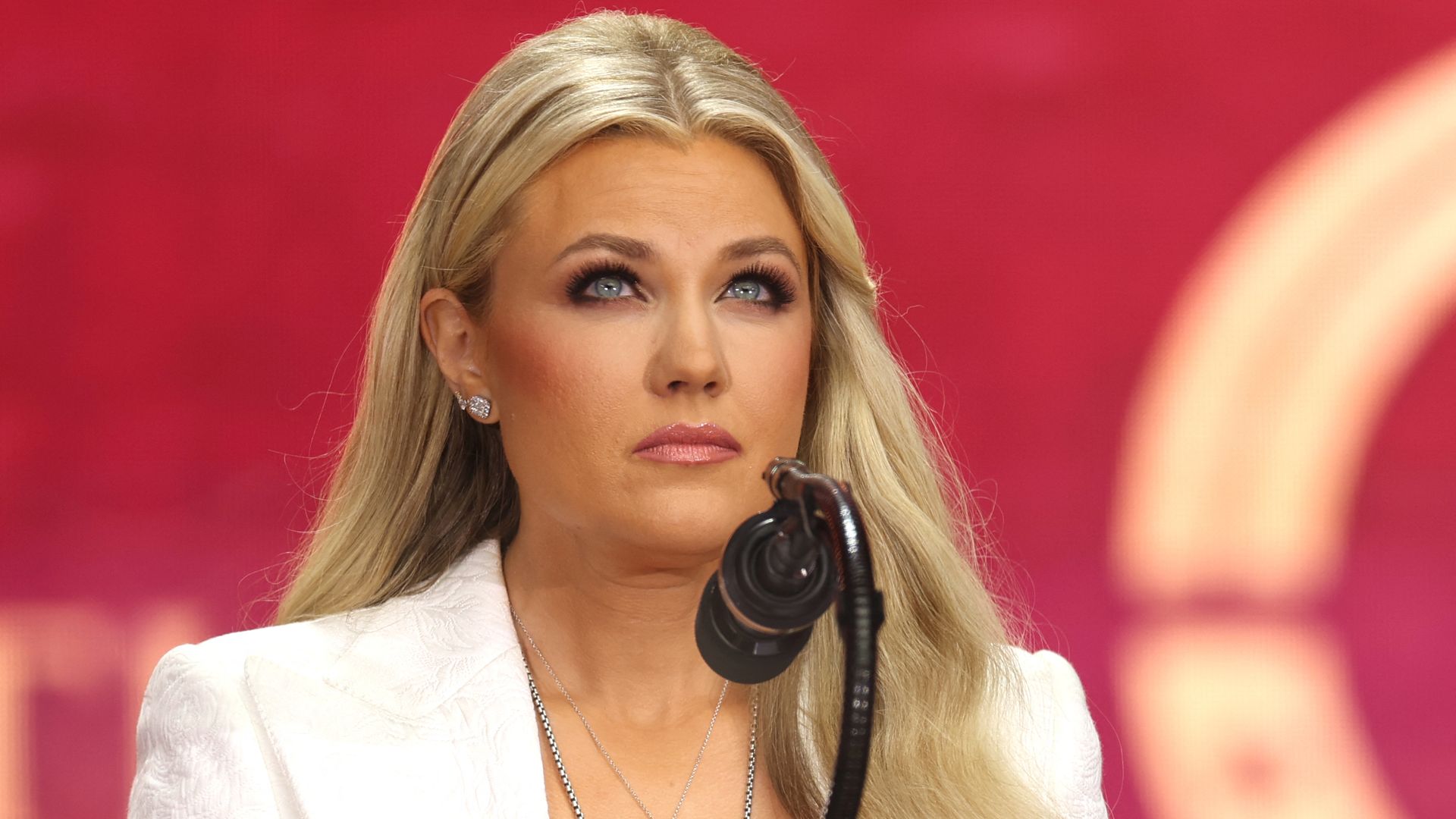)
From the very beginning, there was a noticeable shift in tone. Buckley’s voice, steady yet charged with emotion, carried a weight that immediately commanded attention. As she spoke, she did something few have dared to do on such a stage: she named names. Pam Bondi. Erika Kirk.
The effect was immediate. The room, moments earlier filled with applause, fell into a stunned silence.
Buckley did not elaborate. She did not accuse. She did not explain. Yet, in that deliberate choice of words, she opened a door to a conversation that many would prefer remain closed. It was a calculated, powerful act—one that relied not on explicit statements, but on the collective awareness of a story that has haunted public consciousness for years.
She then turned to a narrative that has become emblematic of both courage and controversy: the story of Virginia Giuffre. Without dramatization, Buckley referenced the allegations that once shook the world—claims tied to the late financier Jeffrey Epstein and the network of influence and power that surrounded him.
Again, she stopped short of direct accusation. But she didn’t need to go further. The implication was clear, and the message unmistakable.
What followed was the line that would reverberate across headlines, social media platforms, and living rooms across the globe:
“As women, always stand by one another.”
It was simple. It was sharp. And it was devastatingly effective.

Within minutes, clips of Buckley’s speech began circulating online. Within hours, it had amassed millions—then hundreds of millions—of views. By the next day, the moment had surpassed an astonishing 3 billion views worldwide, becoming one of the most-watched and most-discussed Oscar speeches in history.
But the numbers only tell part of the story.
What made this moment so powerful was not just what was said, but what it represented. In an industry often criticized for its silence in the face of wrongdoing, Buckley’s words felt like a rupture—a break from tradition, from caution, from carefully curated public narratives.
For many viewers, especially women, the speech struck a deeply personal chord. It was seen as an act of solidarity, a reminder that behind every headline, every allegation, and every controversy, there are human lives shaped by courage and fear, by silence and the decision to finally speak.
Social media became a battleground of interpretation. Supporters praised Buckley for her bravery, calling the speech “historic,” “necessary,” and “long overdue.” They argued that her platform gave voice to those who are often ignored or dismissed, and that her refusal to remain silent was, in itself, a form of justice.
Critics, however, questioned the ambiguity of her remarks. Some argued that invoking real names without context risked fueling speculation and misinformation. Others suggested that the Oscars stage might not be the appropriate venue for such statements, especially when they touch on sensitive and complex issues.
Yet, even among critics, there was an acknowledgment of one undeniable fact: the speech mattered.

It mattered because it disrupted expectations. It mattered because it forced a global audience to pause and reflect. And it mattered because it highlighted a tension that continues to define our era—the struggle between silence and accountability.
In many ways, Buckley’s moment can be seen as part of a broader cultural shift. Over the past decade, movements advocating for transparency, justice, and the protection of vulnerable individuals have gained unprecedented momentum. Stories that were once buried are now brought into the light, often at great personal cost to those who tell them.
But with that shift comes complexity.
Buckley’s speech did not provide answers. It did not resolve debates. Instead, it asked questions—difficult, uncomfortable questions about power, responsibility, and the role of those who have a platform.
What does it mean to speak out?
When is silence complicity?
And perhaps most importantly: what responsibility do we have to stand by one another?
These are not questions with easy answers. And perhaps that is precisely why the moment resonated so deeply.
Inside the auditorium, reactions were mixed but undeniably intense. Some attendees appeared visibly moved, others uncertain, and a few caught in the tension of a moment that seemed to blur the line between art and reality. The applause that followed was not immediate. It came slowly, almost cautiously, as if the audience was still processing what they had just witnessed.
Outside the theatre, however, the reaction was anything but hesitant.

Celebrities, activists, journalists, and everyday viewers weighed in, each interpreting the speech through their own lens. For some, it was a turning point—a sign that even the most polished institutions are no longer immune to the demands of truth. For others, it was a reminder of how powerful—and potentially dangerous—words can be when delivered on a global stage.
Yet, beyond the debates, beyond the headlines and hashtags, there is a quieter impact—one that may not be immediately visible.
Somewhere, a woman watching that speech may have felt less alone.
Somewhere, someone struggling with whether to speak up may have found a measure of courage.
Somewhere, the idea of solidarity may have shifted from an abstract concept to something tangible, something urgent.
And that may be the true legacy of that night.
Award shows are often dismissed as fleeting spectacles—moments of glamour that fade as quickly as they arrive. But every so often, something breaks through the surface. Something real. Something that lingers.
Jessie Buckley’s speech was one of those moments.

It was not perfect. It was not universally accepted. But it was undeniably powerful.
In a world where silence has too often been the default, her words served as a reminder that speaking—even carefully, even indirectly—can have consequences that ripple far beyond a single stage.
As the lights dimmed and the ceremony continued, one thing was clear: the night had changed. The conversation had shifted. And the echo of that final line—“As women, always stand by one another”—was not going away anytime soon.
Whether it will lead to lasting change remains to be seen. But for one night, at least, the world was listening.


