
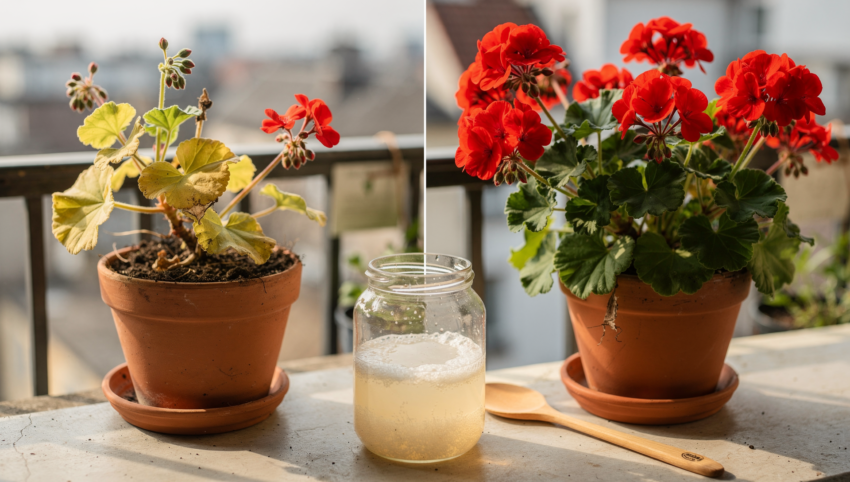
Here’s the good news: the solution may already be sitting in your kitchen.
Plain baking yeast, the same one used for bread, can give weak geraniums a gentle but powerful boost. It’s affordable, natural, and surprisingly effective. Even better, it works with the plant’s natural growth rhythm instead of forcing fast, fragile growth.
This guide walks you through how yeast helps geraniums recover, how to use it safely, and when it works best. No hype. No risky claims. Just simple, garden-smart care that keeps your plants healthy and your content ad-friendly.
Why Geraniums Lose Their Spark
Geraniums are hardy, but they’re not invincible. Over time, several things can slow them down:
-
Depleted potting soil
-
Cold or cloudy weather
-
Overwatering or compacted roots
-
Nutrient imbalance
When roots struggle, the whole plant feels it. Growth slows, stems thin, and flowers become scarce. What these plants often need isn’t stronger fertilizer—it’s better soil activity.
That’s where yeast comes in.
How Yeast Helps Plants Naturally
Yeast is full of beneficial microorganisms. When added to soil in a mild solution, it:
-
Activates helpful microbes in the soil
-
Encourages root growth
-
Improves nutrient availability
-
Supports steady, balanced development
Think of it as waking up the soil rather than pushing the plant. Healthy soil leads to healthy roots, and strong roots lead to fuller leaves and more blooms.
This gentle approach makes yeast especially useful for weak or stressed geraniums.
How to Make Yeast Fertilizer
You only need three simple items:
-
1 teaspoon dry baking yeast
-
1 teaspoon sugar
-
1 liter (about 4 cups) lukewarm water
Steps:
-
Mix the yeast and sugar into the water.
-
Let it sit for 1–2 hours. This activates the yeast.
-
Dilute the mixture with another liter of water.
-
Water the soil around your geranium—not the leaves.
That’s it. No special tools, no complicated steps.
When and How Often to Use It
-
Use once every 3–4 weeks during active growth (spring to early autumn).
-
Apply only to slightly moist soil.
-
Avoid using during winter dormancy.
More is not better. Yeast works best in small, spaced-out doses. Overuse can disturb the soil balance, which is the opposite of what we want.
What to Expect After Application
Most gardeners notice:
-
Greener, firmer leaves within 7–10 days
-
Stronger stems
-
New side growth
-
Improved blooming over time
The change is gradual but steady. Geraniums respond with healthier structure rather than sudden, weak growth.
And that’s exactly what long-term plant care should look like.
Extra Tips for Better Results
Yeast works best when combined with good habits:
-
Use well-draining soil
-
Let the top inch of soil dry between waterings
-
Give plants bright, indirect light
-
Remove faded blooms regularly
Together, these steps create the ideal environment for yeast to do its job.
Conclusion
Weak geraniums don’t need harsh chemicals or expensive treatments. Sometimes, they just need a little nudge in the right direction. Yeast offers that nudge in the most natural way possible—by restoring life to the soil and strength to the roots.
It’s simple. It’s affordable. And it fits perfectly into a calm, sustainable gardening routine.
So next time your geranium looks tired, don’t rush to replace it. Try this gentle kitchen remedy instead. With a bit of patience and care, you may be surprised how quickly your plant finds its rhythm again—greener, stronger, and ready to bloom.


