
Onions deliver more than flavor. Their main “better-for-you” compounds include flavonoids (like quercetin) and several reactive sulfur compounds. The cut matters because, in a whole onion, enzymes and sulfur-containing precursors sit in separate compartments. When you cut, chop, or grate, you rupture cells, they mix, and new sulfur compounds start forming within seconds—the same chemistry behind the sharp smell and tears.
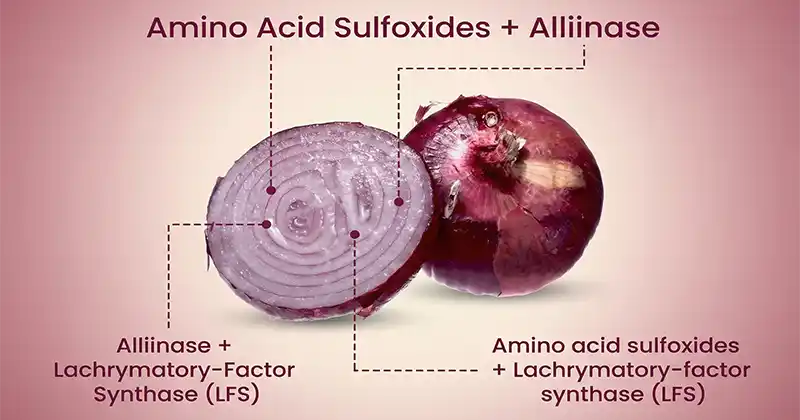
Different cuts don’t magically add nutrients, but they can change how much of that fresh sulfur chemistry you generate and how the onion behaves under heat (and whether compounds leach into water). Here’s what the most common cuts tend to do.
1) Wedges (big pieces, mild release)
Wedges keep many layers intact, especially if you leave the root end holding them together. Because you rupture fewer cells, you get a gentler sulfur “burst” and a milder bite. From a nutrition angle, wedges are often paired with roasting or grilling—dry-heat cooking that has been reported to preserve or even increase measured phenolics/quercetin derivatives compared with boiling, where some compounds can move into the water.
2) Pole-to-pole slices (with the grain)
Slice from stem to root. This cut follows the onion’s grain, so the pieces stay cohesive and soften slowly. You still create fresh surfaces (so sulfur compounds form), but not as aggressively as fine chopping. It’s a “balanced” cut: flavorful, easy to cook gently, and less likely to feel harsh than very fine raw onion.
3) Rings / half-moons (more exposed surface, faster chemistry)
Rings and half-moons expose a lot of fresh surface area at once. More exposed surface generally means stronger raw aroma and sharper bite because more tissue is opened and enzyme-driven reactions can run quickly.
If you like onion raw, this is a clean way to get that “fresh onion” sulfur profile while still keeping a crisp texture.
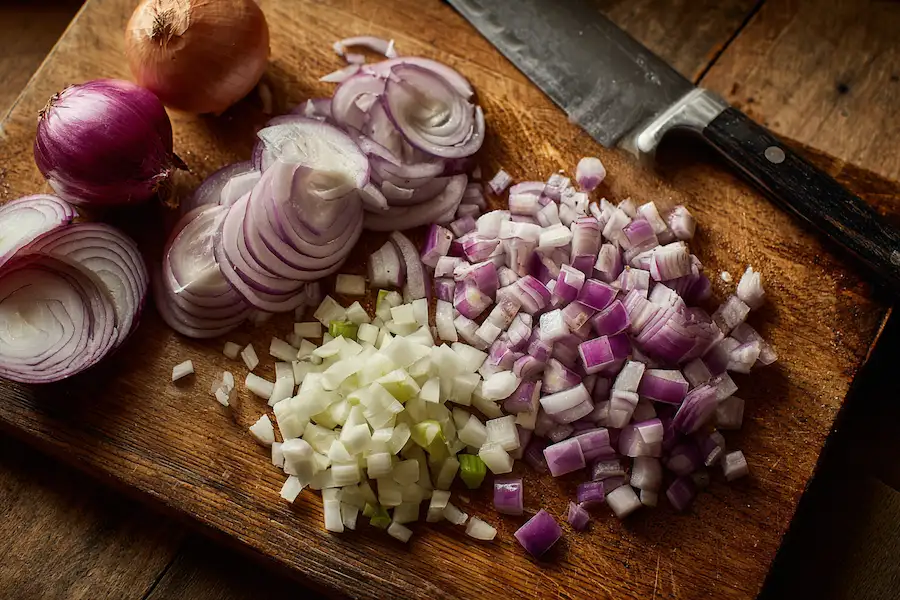
4) Dice (the smaller you go, the more you “unlock”)
Dicing is a sliding scale:
- Large dice = less rupture, more chew, slower release.
- Medium dice = classic cooking base, good distribution.
- Small dice = more rupture, faster cooking, stronger early aroma.
One important interaction is heat: research on processing before cooking shows that the way onion is prepared can affect how long certain biological activities persist during heating, with more intact preparations sometimes retaining activity longer than heavily crushed onion under oven heat.
5) Fine mince (maximum spread)
Mince pushes cell rupture higher and spreads onion juice throughout a dish, so you get onion compounds in nearly every bite. Raw, it tastes stronger. Cooked, it changes quickly—minced onion browns fast and prolonged high heat can shift “fresh” onion chemistry toward deeper roasted flavors.
6) Grated onion (juice + pulp, most intense)
Grating is maximum disruption: a wet pulp where enzymes and precursors fully mix. That typically creates the strongest immediate sulfur-compound surge. If you plan to cook grated onion, a short rest after grating (just a few minutes) can let those reactions happen before high heat slows them down.
Quick note on quercetin
Quercetin is comparatively stable, and cooking method can matter more than cut: dry-heat methods have been reported to increase measured phenolics/quercetin derivatives, while boiling can reduce what stays in the onion by transferring some into the cooking liquid.
Takeaway
For the strongest “fresh onion” chemistry, go smaller (small dice, mince, grate), especially for raw uses or brief cooking. For a gentler onion that still delivers antioxidants, go bigger (wedges, pole-to-pole slices) and favor sautéing/roasting over boiling.
How to apply it (without overthinking it)
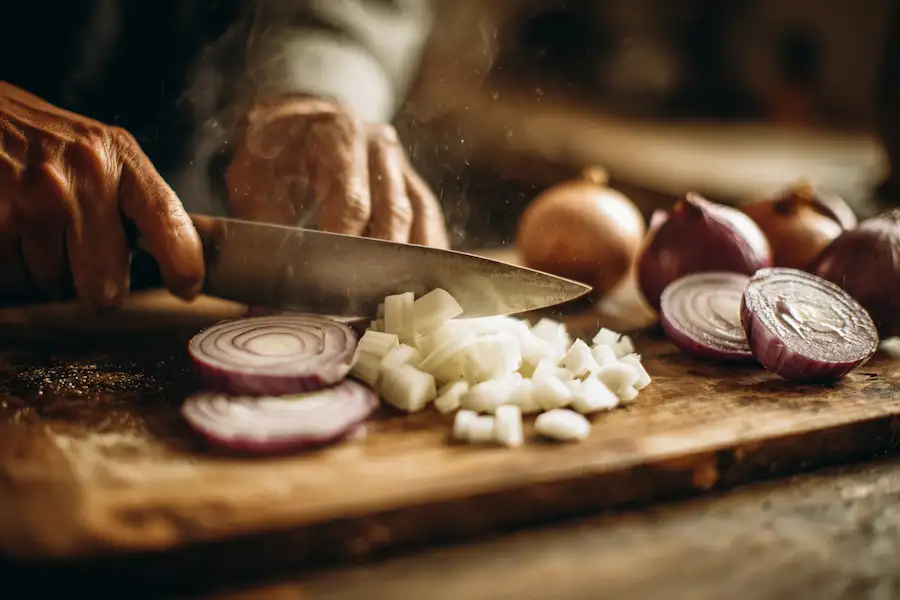
If you’re using onion raw, your cut is your “dose control”: rings and thick slices give crunch and a moderate punch; mince or grated onion gives maximum intensity and spreads quickly through the whole food. If you’re cooking and you care about the enzyme-made sulfur compounds, cut first and let the onion sit briefly before high heat—those reactions happen after cells are damaged, but enzymes can be slowed or stopped once the onion is heated. For soups or stews where onions simmer in liquid, remember that boiling can move some antioxidants into the cooking water; keeping the broth in the final dish helps you keep what leaches out.


