
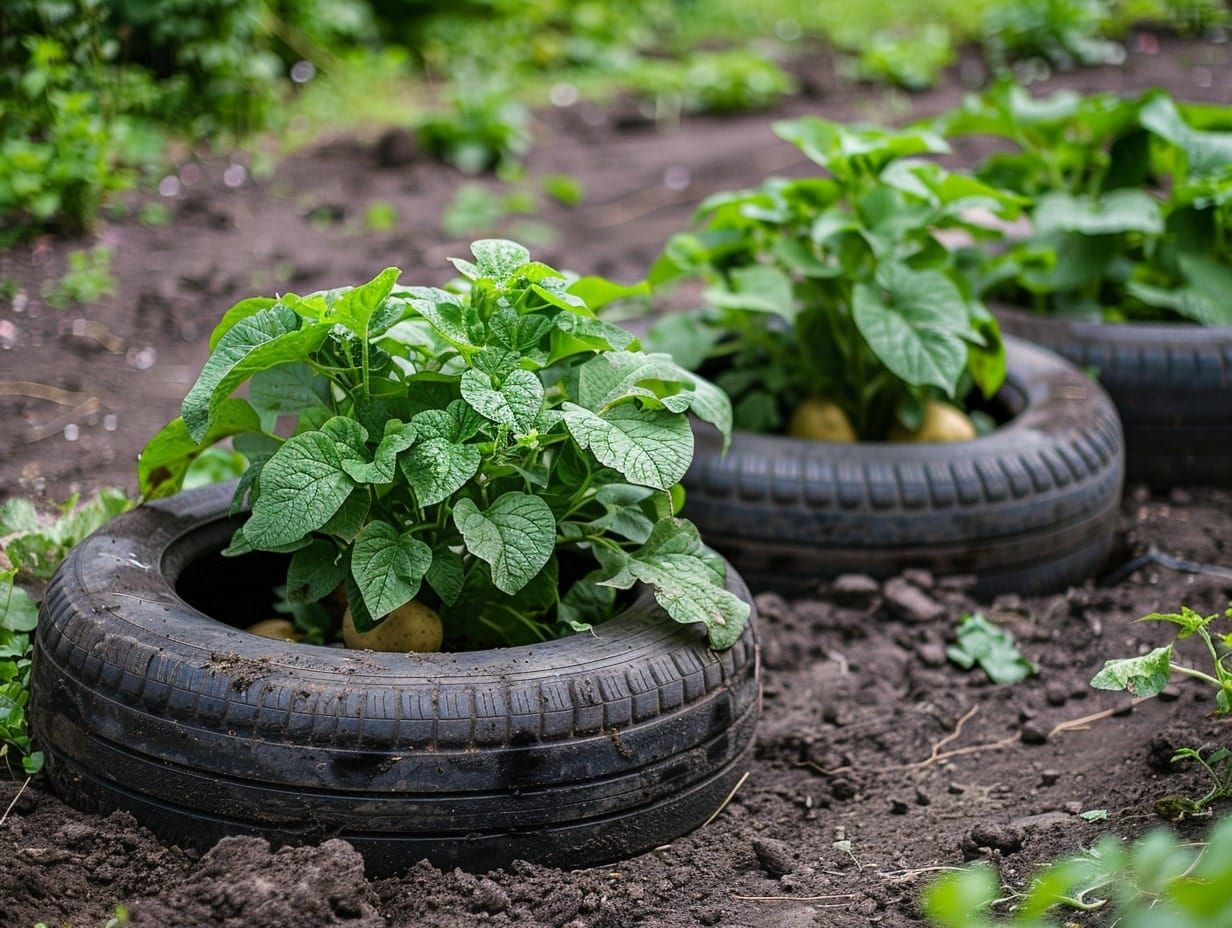
Think you need a big backyard to grow a serious potato harvest? Think again. When space is tight—tiny patio, narrow side yard, or just a sunny corner near the fence—creativity becomes your best gardening tool. That’s where the tire method comes in.
Growing potatoes in stacked tires has become a favorite among home gardeners for one simple reason: it turns vertical space into productive growing space. Instead of spreading out, you build up. Layer by layer, soil by soil, your potatoes grow in a compact tower that can fit almost anywhere.
And here’s the best part—it’s budget-friendly, beginner-friendly, and surprisingly effective when done properly. Let’s break down how this method works, why so many gardeners love it, and how you can make it part of your own small-space garden setup.
Why Growing Potatoes in Tires Works So Well
Potatoes grow along buried stems. The more stem you cover with soil as the plant grows, the more opportunities the plant has to produce tubers. This natural growth habit makes potatoes ideal for vertical systems.
By stacking tires and gradually adding soil as the plant grows taller, you mimic the traditional “hilling” method used in ground beds. Only this time, you’re doing it in a contained vertical column.
Here’s why gardeners appreciate this approach:
-
Space efficiency: Perfect for patios, driveways, and compact yards.
-
Improved drainage: Tires allow excess water to escape more easily than heavy clay soil.
-
Easy harvesting: Simply remove the stacked tires at the end of the season and collect your potatoes without heavy digging.
-
Recycling benefit: Repurposing old tires gives them a second life in the garden.
When managed properly, this method can produce an impressive yield from a surprisingly small footprint.
How to Set Up a Tire Potato Tower
Getting started is straightforward, but preparation matters.
1. Choose the Right Location
Pick a sunny spot that receives at least 6–8 hours of direct sunlight daily. Potatoes love full sun and consistent warmth.
2. Prepare the Base
Place the first tire directly on soil or on top of cardboard layered over grass to suppress weeds. Fill the tire with high-quality garden soil mixed with compost. Well-draining soil is essential.
3. Plant Seed Potatoes
Use certified seed potatoes for best results. Cut larger seed potatoes into chunks with at least one “eye” per piece, and let them dry for a day before planting. Place them about 4 inches deep and space evenly within the tire.
4. Add Soil Gradually
As green shoots grow 6–8 inches tall, add another tire on top and fill around the stems with soil, leaving the top leaves exposed. Repeat this process as the plant continues growing.
This gradual layering encourages more tuber formation along the buried stems.
Watering and Feeding Tips
Consistent moisture is key. Tires can warm up quickly, especially in hot weather, so check soil regularly. The soil should feel slightly moist but never soggy.
A balanced organic fertilizer or compost tea applied during active growth can support healthy foliage and tuber development. Avoid excessive nitrogen, which promotes leaves at the expense of potatoes.
Mulching the top layer with straw helps regulate temperature and retain moisture—simple, effective, and low-cost.
Harvesting Made Easy
One of the most satisfying moments? Harvest day.
When the foliage turns yellow and begins to die back, it’s usually a sign that potatoes are ready. Instead of digging, simply lift off each tire layer and gently remove soil. Potatoes often spill out easily, clean and ready to cure.
This reduces accidental damage and makes harvesting manageable—even for beginners.
Important Considerations
While many gardeners use this method successfully, it’s important to approach it thoughtfully.
-
Use tires that are clean and free from heavy wear.
-
Avoid placing towers where water pools after rain.
-
Monitor temperature in very hot climates, as rubber can absorb heat.
If extreme summer heat is common in your area, partial afternoon shade may help prevent overheating.
Is This Method Right for You?
If you enjoy container gardening, DIY projects, or maximizing every inch of your growing space, the tire method fits right in. It pairs especially well with other vertical ideas—stackable crates, grow bags, or 5-gallon bucket systems.
For gardeners working with limited land or renters who need flexibility, this approach offers adaptability without permanent structures.
Conclusion
Growing potatoes in tires proves that you don’t need acres of land to enjoy a rewarding harvest. With sunlight, quality soil, and consistent care, a simple stack of recycled tires can turn into a productive vertical garden.
It’s practical. It’s efficient. And for many home gardeners, it’s a smart way to grow more in less space.
If your garden area feels cramped, don’t scale down your ambition—build upward instead. Your next batch of homegrown potatoes might be just a tire stack away.


