
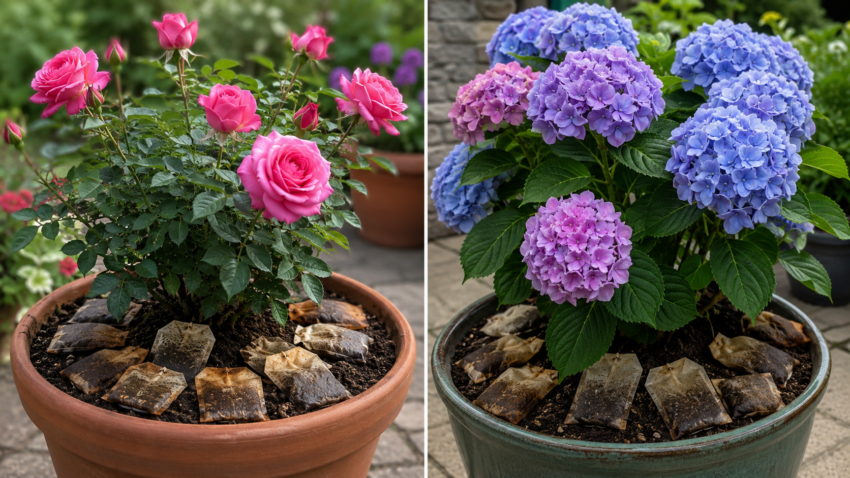
Most gardeners are always searching for simple and affordable ways to help their plants grow healthier and stronger. While compost, mulch, and organic fertilizers are well-known garden helpers, there is another household item that often gets thrown away too quickly — used tea bags. Surprisingly, many plants can benefit from the nutrients and organic matter left inside used tea bags.
Tea leaves contain natural compounds that may improve soil texture, add small amounts of nutrients, and help retain moisture around plant roots. When used properly, tea bags can become a gentle addition to your gardening routine without requiring expensive products or complicated methods.
However, it is important to use plain tea bags without plastic materials or artificial flavorings. Organic tea bags work best because they break down naturally in the soil. Simply allow the tea bags to cool after use, then place them around the base of plants, mix the contents into compost, or bury them lightly beneath the soil surface.
Here are seven popular plants that often respond well to used tea bags in the garden.
1. Roses
Roses are heavy feeders that appreciate nutrient-rich soil. Used tea bags can help add organic matter around the base of rose bushes while helping the soil stay slightly moist for longer periods.
The mild acidity from tea leaves may also support healthy soil conditions for many rose varieties. To use tea bags for roses, place the contents around the root zone and lightly mix them into the top layer of soil. Avoid using too many at once, as moderation is always best.
Many gardeners also combine tea leaves with compost to create a richer growing environment for roses throughout the growing season.
2. Hydrangeas
Hydrangeas thrive in soil that stays evenly moist and rich in organic material. Used tea bags can help improve moisture retention while slowly breaking down into the soil.
Some gardeners enjoy using tea leaves around blue hydrangeas because acidic soil conditions may help maintain vibrant blue flower tones in certain varieties. While tea bags alone will not dramatically change bloom color, they can still contribute to healthy soil when used consistently as part of an overall care routine.
Scatter small amounts of tea leaves around the base of the plant and water thoroughly afterward.
3. Ferns
Ferns naturally grow in woodland environments filled with decaying organic matter. Because of this, they often appreciate the gentle addition of used tea leaves in garden beds or containers.
Tea leaves may help improve the soil structure around ferns while supporting moisture retention during warmer weather. Ferns prefer consistently damp soil, making tea leaves a simple organic addition for shaded garden spaces.
If growing ferns indoors, use tea leaves sparingly and always monitor the soil to avoid excessive moisture buildup.
4. Tomatoes
Tomato plants benefit from nutrient-rich soil with good moisture balance. Used tea bags can be added to compost or buried lightly near tomato plants to contribute organic material over time.
Tea leaves may also encourage beneficial microbial activity in compost piles, which can later support healthier garden soil. When planting tomatoes, some gardeners place a used tea bag near the planting hole as part of their organic gardening routine.
Remember to avoid overusing tea bags directly in containers, especially if drainage is limited.
5. Camellias
Camellias prefer slightly acidic soil conditions and often grow well when organic matter is regularly added around their roots. Used tea leaves can serve as a gentle supplement alongside mulch and compost.
Because camellias have shallow root systems, it is best to spread tea leaves lightly across the soil surface instead of digging deeply around the plant. This helps avoid disturbing the roots while still allowing nutrients to slowly break down into the soil.
Tea leaves may also help improve the texture of heavier soils over time.
6. Peace Lilies
Peace lilies are popular indoor plants known for their glossy green leaves and elegant white blooms. They enjoy soil that stays lightly moist but not overly wet.
Small amounts of tea leaves mixed into potting soil may provide extra organic matter while helping retain moisture. However, indoor plants should always be monitored carefully because excess organic material can sometimes encourage mold if overused.
For best results, use only a small amount of tea leaves occasionally and ensure the container has proper drainage.
7. Blueberries
Blueberry bushes grow best in acidic soil rich in organic matter. Used tea bags can become a useful addition to mulch or compost around blueberry plants.
The organic material from tea leaves may help improve soil conditions while supporting moisture retention around shallow blueberry roots. Many gardeners combine tea leaves with pine needles, bark mulch, or compost for a more complete soil improvement strategy.
When caring for blueberries, consistency matters more than large amounts of any single ingredient. Small additions over time often produce the best long-term results.
Helpful Tips for Using Tea Bags in the Garden
Before adding tea bags to your garden, always check the packaging. Some modern tea bags contain synthetic fibers or plastic materials that do not break down naturally. Emptying the tea leaves from the bag is often the safest option.
It is also important to avoid tea bags that contain added sugars, artificial flavors, or sweeteners. Plain black, green, or herbal teas are usually the best choices for garden use.
Used tea leaves work especially well when combined with compost, mulch, and healthy watering practices. They should never replace balanced soil care, but they can become a useful part of an eco-friendly gardening routine.
Conclusion
Reusing used tea bags in the garden is a simple way to reduce household waste while giving certain plants an extra organic boost. Roses, hydrangeas, ferns, tomatoes, camellias, peace lilies, and blueberries are just a few plants that may benefit from the gentle nutrients and moisture-retaining properties found in tea leaves.
Like many gardening techniques, success comes from balance and consistency. Small amounts added over time can help support healthier soil and stronger plants without relying entirely on commercial products.
The next time you finish your morning tea, consider saving those tea bags instead of throwing them away. Your garden may appreciate the extra care.


