
Growing your own food does not require a massive backyard or rows of tilled dirt. If you have a small patio, a sunny balcony, or a simple outdoor yard, you can grow a highly productive garden in the air. Hanging baskets are traditionally used for decorative flowers, but they are also an incredible way to grow fresh fruits, vegetables, and herbs.
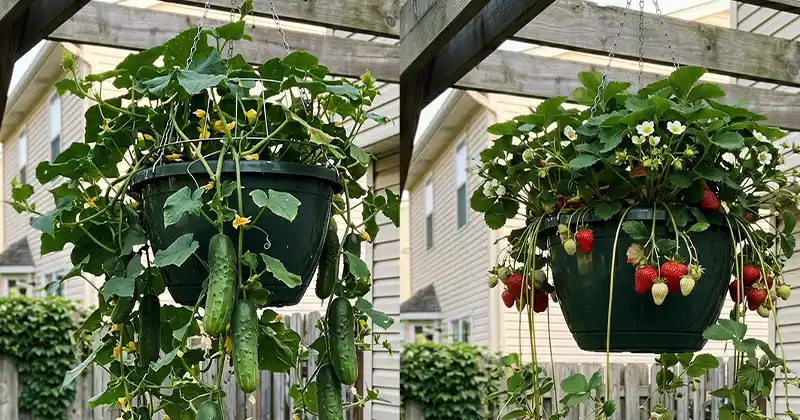
By combining living plants with practical food production, you can create a beautiful outdoor space that also provides fresh, homemade ingredients for your kitchen all summer long.
The Practical Advantages of Growing in the Air
Moving your plants off the ground and into hanging baskets offers several powerful benefits for the home gardener.
- Saves Valuable Space: If you have limited ground area, moving plants up into the air gives you more room to walk, work, and relax on your patio. It turns empty vertical space into a productive garden.
- Keeps Pests Away: Keeping plants high off the damp soil protects your harvest from crawling bugs, slugs, and common soil diseases that often destroy crops planted in the ground.
- Makes Harvesting Easy: When fruits and vegetables hang at eye level, you do not have to bend down, kneel in the dirt, or hurt your back to pick your food.
- Improves Plant Health: Hanging baskets provide excellent air circulation around the leaves, which helps prevent mold and fungal infections.
- Creates Living Decoration: The dark green leaves, bright flowers, and colorful hanging foods make your patio look vibrant and welcoming. It is a garden that works as both food and decoration.
The Best Vegetables for Hanging Baskets
Not all vegetables do well in containers, but many varieties are specifically bred to grow over the edge of a pot. For the best results, look for compact or trailing varieties.
- Bush Cucumbers: Standard cucumbers will outgrow a basket, but bush or dwarf varieties are perfect. They form compact plants that trail about two to three feet over the edges. Growing them in the air prevents the fruit from rotting on the damp soil, and gravity helps the cucumbers grow perfectly straight.
- Cherry and Grape Tomatoes: Small tomatoes are incredibly common in hanging baskets. You should plant cascading or tumbling varieties, which are specifically bred for containers. These yield a massive crop of bite-sized tomatoes and have stems that grow downward, completely eliminating the need for wooden stakes or metal cages.
- Sweet Potatoes: While sweet potatoes are usually grown deep in the ground for their large roots, sweet potato vines are stunning in hanging baskets. They grow beautiful, bright green or purple leaves that trail downward rapidly. The young leaves are edible and can be cooked like spinach, making the plant both beautiful and highly useful.
- Lettuce and Leafy Greens: Leafy greens like loose-leaf lettuce, spinach, and Swiss chard grow quickly and have shallow roots. Growing lettuce in a basket is a strategic way to keep the tender leaves entirely out of reach of slugs.
- Dwarf Peppers: Compact chili peppers and dwarf sweet peppers are widely grown in baskets. Their shorter, bushier growth habits make them perfectly suited for container life while providing heavy yields and a vibrant burst of color.
- Radishes: These are favored by impatient gardeners because they grow incredibly fast, maturing in just a few weeks. They have very shallow roots that easily fit into a standard basket.
The Best Fruits for Hanging Baskets
Fresh fruit grown at home tastes significantly better than anything you can buy at the grocery store.
- Strawberries: This is the absolute classic hanging basket fruit. Strawberry plants naturally produce long runners that cascade beautifully over the edge of a pot. The bright red berries look like natural ornaments against the dark green leaves. They grow perfectly in tight spaces and provide multiple harvests of sweet food throughout the summer.
- Dwarf Blueberries: Some newer types of blueberry bushes are small enough to live comfortably in a large hanging basket. They offer tiny white bell-shaped flowers in the spring, rich blue fruit in the summer, and striking red leaves in the autumn.
The Best Culinary Herbs to Include
Herbs are very easy to grow, require less space, and add powerful, fresh flavor to your homemade meals.
- Trailing Herbs: Thyme, oregano, and creeping rosemary are highly prized for baskets. They naturally creep and spill over the edges like a thick green blanket, and you can clip them exactly when you need them for cooking.
- Upright Herbs: Basil, chives, and parsley are often planted in the center of the basket. They add height to the arrangement and provide robust flavor for kitchen use.
- Mint: Mint grows very fast and spreads aggressively. Keeping it trapped in a hanging basket stops it from taking over your entire garden. It hangs down nicely and is perfect for making fresh homemade tea.
Steps to Maximize Your Homemade Harvest
If you want a big yield from a hanging basket, you must remember that the plant is entirely dependent on you for its survival. A basket is an isolated environment, so the setup has to be perfect.
- Choose the Right Pot: You need a large basket that is at least twelve to fourteen inches wide and eight to ten inches deep. Plants like cucumbers and tomatoes have deep roots and drink a lot of water. Larger pots hold more soil, which keeps the roots cool during hot days.
- Use Quality Soil: Never use heavy dirt dug up directly from your yard. It will compact in the pot and prevent water from draining. Always choose a high-quality, lightweight potting mix designed for containers.
- Add Compost: Mixing in a few handfuls of rich compost will give your young plants a strong start and provide essential nutrients for the first few weeks of growth.
- Water Aggressively: Baskets dry out from the top, bottom, and sides. In the peak of summer, you will likely need to water them every single day, and sometimes twice a day. If a plant gets thirsty while blooming, it will drop its flowers instead of turning them into food.
- Feed Them Constantly: Because you are watering so often, nutrients wash right out the bottom of the basket. To keep the harvest coming, feed the plants with a liquid fertilizer or compost tea every ten to fourteen days once flowers appear.
- Provide Plenty of Sun: Hang the basket somewhere that gets a minimum of six to eight hours of direct, unobstructed sunlight per day. Sun is the energy that turns flowers into fruits and vegetables.
Growing an edible hanging garden is a highly rewarding project. By following these simple steps and choosing the right plants, anyone can turn a basic outdoor space into a beautiful, food-producing area.


